


- Best Seller
- Best Seller
- Best Seller
- Best Seller
- Best Seller
- Best Seller















What are heel inserts?
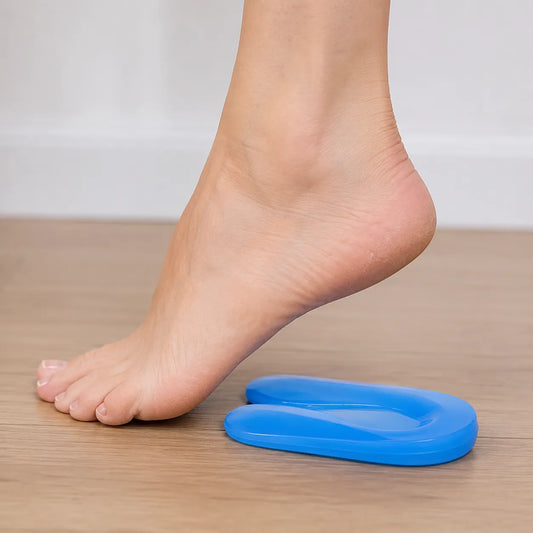
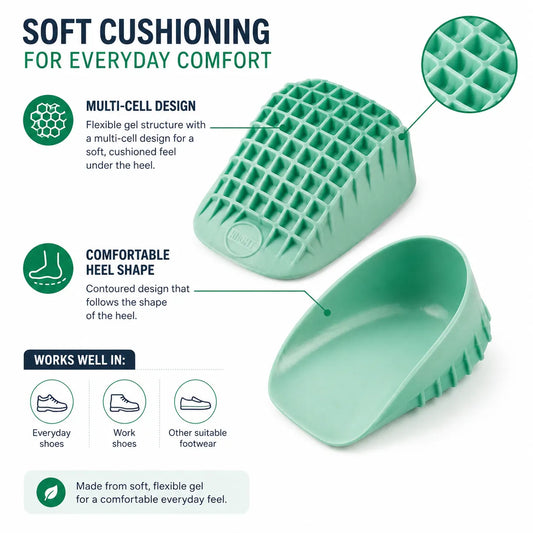
Heel inserts is a collective term for different types of insoles that support and relieve the heel. They can be designed as:
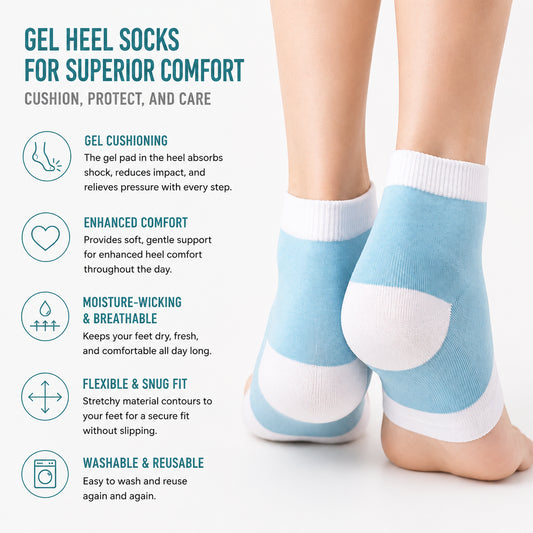
- Soft heel cushions
- Stable heel cups
- Heel wedges for elevation
The purpose is to reduce pressure on the heel and improve the foot's load distribution with every step.
When should you use heel inserts?
Heel inserts are used both for pain relief and prevention.
Common problems that heel inserts can help with:
- Heel spur (plantar fasciitis)
- Sore or tired heel
- Worn-down heel pad
- Pain when walking or standing
- Overuse during exercise
- Leg length discrepancy (heel wedge)
For heel spurs, heel inserts can reduce pressure on the inflamed tissue, thereby relieving pain and speeding up healing.
How heel inserts work
Heel inserts relieve the heel by:
- Distribute pressure over a larger surface
- Reduce strain on the heel bone
- Cushion shocks with every step
- Stabilizes the position of the foot
For example, a heel cup can cradle and support the heel pad, reducing pressure and improving shock absorption.
Benefits of heel inserts
Using heel inserts provides several clear benefits:
- Relieves heel pain
- Provides better shock absorption
- Increases everyday comfort
- Improves walking and weight distribution
- Reduces the risk of overuse
- Can speed up recovery
Many people experience improvement immediately when the strain on the heel is reduced.
Different types of heel inserts
There are several variants depending on your needs:
- Heel cushion - Soft and shock-absorbing, perfect for sore heels
- Heel cup - Stabilizes and surrounds the heel, suitable for heel spurs and pain
- Heel wedge - Raises the heel slightly and reduces strain on tendons and the arch of the foot
Which heel insert should you choose?
For the best results, you should choose based on your needs:
- For pain: choose a soft shock-absorbing model
- For stability: choose a heel cup
- For strain-related problems: choose a heel wedge
- For everyday use: choose a thin and flexible model
A good example of an effective heel insert is heel insert with a pressure-relieving zone for the heel , specially designed to reduce pressure where it hurts the most.
The most important thing is that the insert fits comfortably and does not create pressure.
Frequently asked questions about heel inserts
Do heel inserts provide immediate relief?
Yes, many people experience immediate relief through reduced pressure and better cushioning.
Can you use heel inserts every day?
Yes, they are designed for daily use.
Are heel inserts good for heel spurs?
Yes, they are one of the most effective solutions for reducing strain and pain.
Do heel inserts fit all shoes?
Most models work in both everyday and athletic shoes.
Why you should use heel inserts
If you have heel pain or want to increase comfort in your shoes, heel inserts are one of the simplest and most effective solutions.
They reduce strain, absorb shocks, and help you move more comfortably every day.
Read more: Information about heel pain on 1177
What are heel inserts?
Heel inserts is a collective term for different types of insoles that support and relieve the heel. They can be designed as:
- Soft heel cushions
- Stable heel cups
- Heel wedges for elevation
The purpose is to reduce pressure on the heel and improve the foot's load distribution with every step.
When should you use heel inserts?
Heel inserts are used both for pain relief and prevention.
Common problems that heel inserts can help with:
- Heel spur (plantar fasciitis)
- Sore or tired heel
- Worn-down heel pad
- Pain when walking or standing
- Overuse during exercise
- Leg length discrepancy (heel wedge)
For heel spurs, heel inserts can reduce pressure on the inflamed tissue, thereby relieving pain and speeding up healing.
How heel inserts work
Heel inserts relieve the heel by:
- Distribute pressure over a larger surface
- Reduce strain on the heel bone
- Cushion shocks with every step
- Stabilizes the position of the foot
For example, a heel cup can cradle and support the heel pad, reducing pressure and improving shock absorption.
Benefits of heel inserts
Using heel inserts provides several clear benefits:
- Relieves heel pain
- Provides better shock absorption
- Increases everyday comfort
- Improves walking and weight distribution
- Reduces the risk of overuse
- Can speed up recovery
Many people experience improvement immediately when the strain on the heel is reduced.
Different types of heel inserts
There are several variants depending on your needs:
- Heel cushion - Soft and shock-absorbing, perfect for sore heels
- Heel cup - Stabilizes and surrounds the heel, suitable for heel spurs and pain
- Heel wedge - Raises the heel slightly and reduces strain on tendons and the arch of the foot
Which heel insert should you choose?
For the best results, you should choose based on your needs:
- For pain: choose a soft shock-absorbing model
- For stability: choose a heel cup
- For strain-related problems: choose a heel wedge
- For everyday use: choose a thin and flexible model
A good example of an effective heel insert is heel insert with a pressure-relieving zone for the heel , specially designed to reduce pressure where it hurts the most.
The most important thing is that the insert fits comfortably and does not create pressure.
Frequently asked questions about heel inserts
Do heel inserts provide immediate relief?
Yes, many people experience immediate relief through reduced pressure and better cushioning.
Can you use heel inserts every day?
Yes, they are designed for daily use.
Are heel inserts good for heel spurs?
Yes, they are one of the most effective solutions for reducing strain and pain.
Do heel inserts fit all shoes?
Most models work in both everyday and athletic shoes.
Why you should use heel inserts
If you have heel pain or want to increase comfort in your shoes, heel inserts are one of the simplest and most effective solutions.
They reduce strain, absorb shocks, and help you move more comfortably every day.
Read more: Information about heel pain on 1177